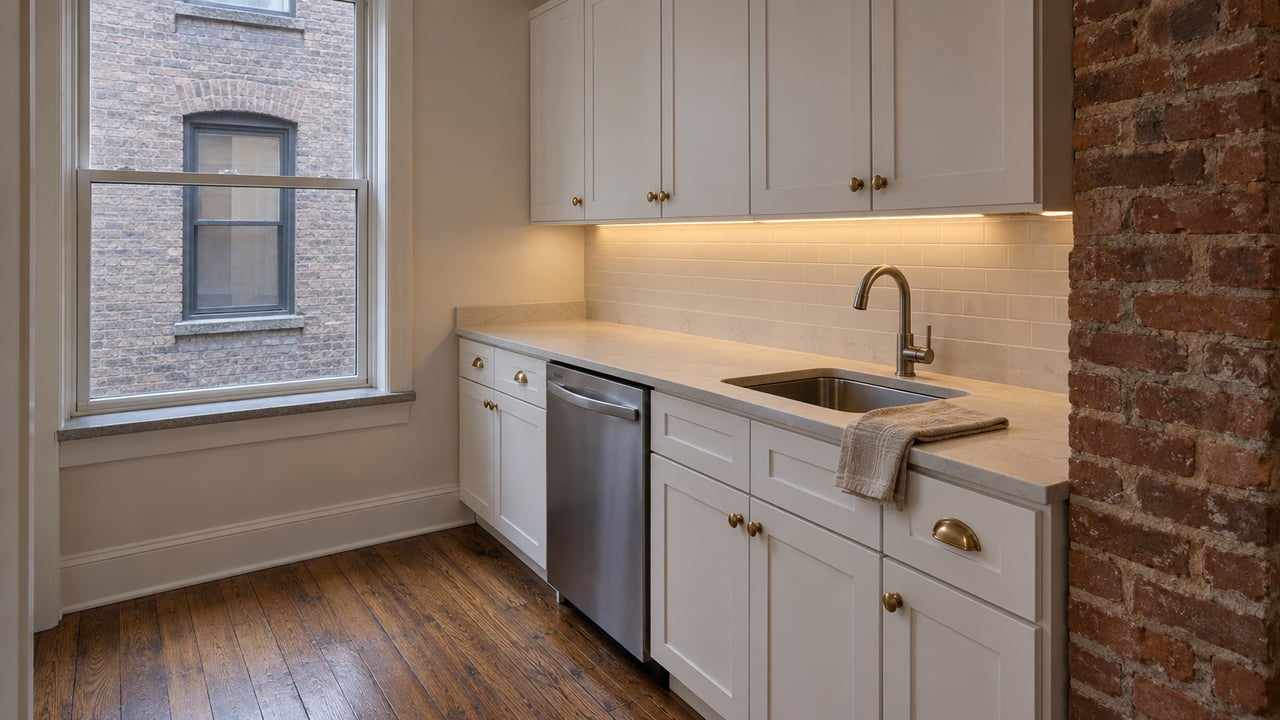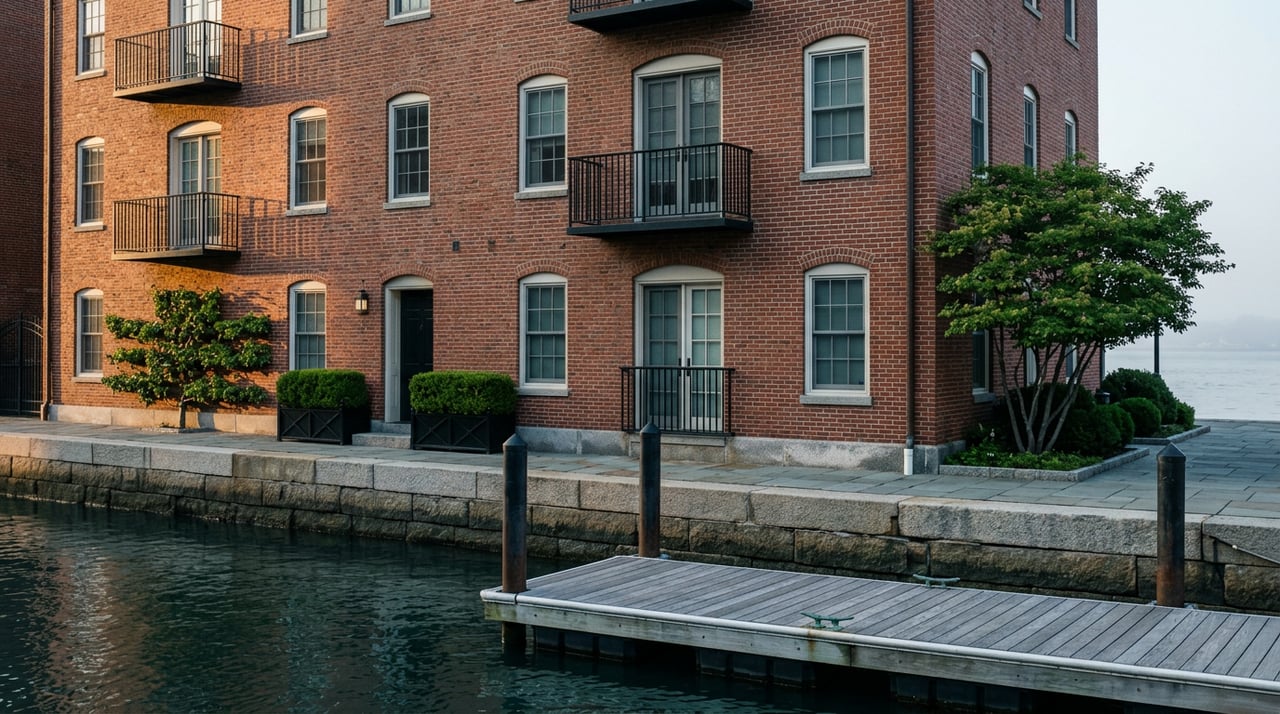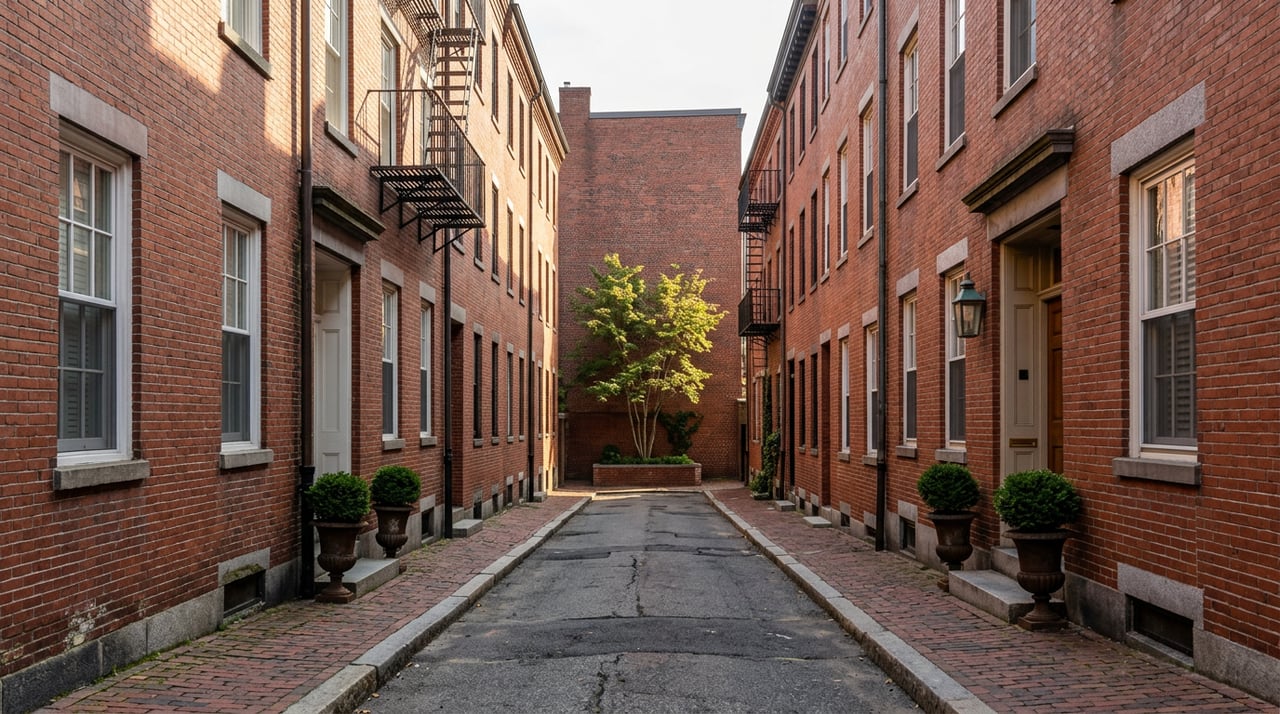
"They're not building any more garages in Beacon Hill." That was the argument a Cabot & Company agent made to WCVB in March 2025, while marketing a single deeded parking space at the Brimmer Street Garage for $750,000. A few blocks away that same season, a 326-square-foot Beacon Hill condo was listed at $499,000. The parking spot cost more than the home.
Buyers comparing Beacon Hill to the North End often use that kind of Beacon Hill sticker shock as their baseline, then look at North End per-square-foot numbers and conclude they've found the relative bargain. The comparison is not wrong exactly. It is incomplete. Beacon Hill lets you see the price of parking because Beacon Hill has an actual market for it. The North End mostly doesn't, and that absence is the part of the math nobody puts on the listing sheet.
Beacon Hill priced parking as real estate. The North End never had the chance.
Brimmer Street Garage converted its spaces into individually deeded condominium units back in 1979, at an original price of $7,500 per space. By 2017, those same spaces were trading at roughly $400,000 according to Forbes reporting on the garage's sales history. The nearby Charles Street Garage, built in the 1920s, went through a similar conversion, carving out 55 deeded spaces sold as condos and restricted to Beacon Hill and West End residents. Both garages turned a scarce resource into an asset class with its own comps, its own appreciation curve, and its own line on a closing statement.
That is what makes the $750,000 listing legible rather than absurd. When a Beacon Hill seller records the sale of a house, the parking space frequently gets recorded as a separate deed, sometimes transferred for a symbolic dollar because it was purchased decades ago, according to the Globe's coverage of the listing. Buyers there can ask a direct question: does this unit come with a deeded spot, and if not, what would one cost on its own? The market has an answer.
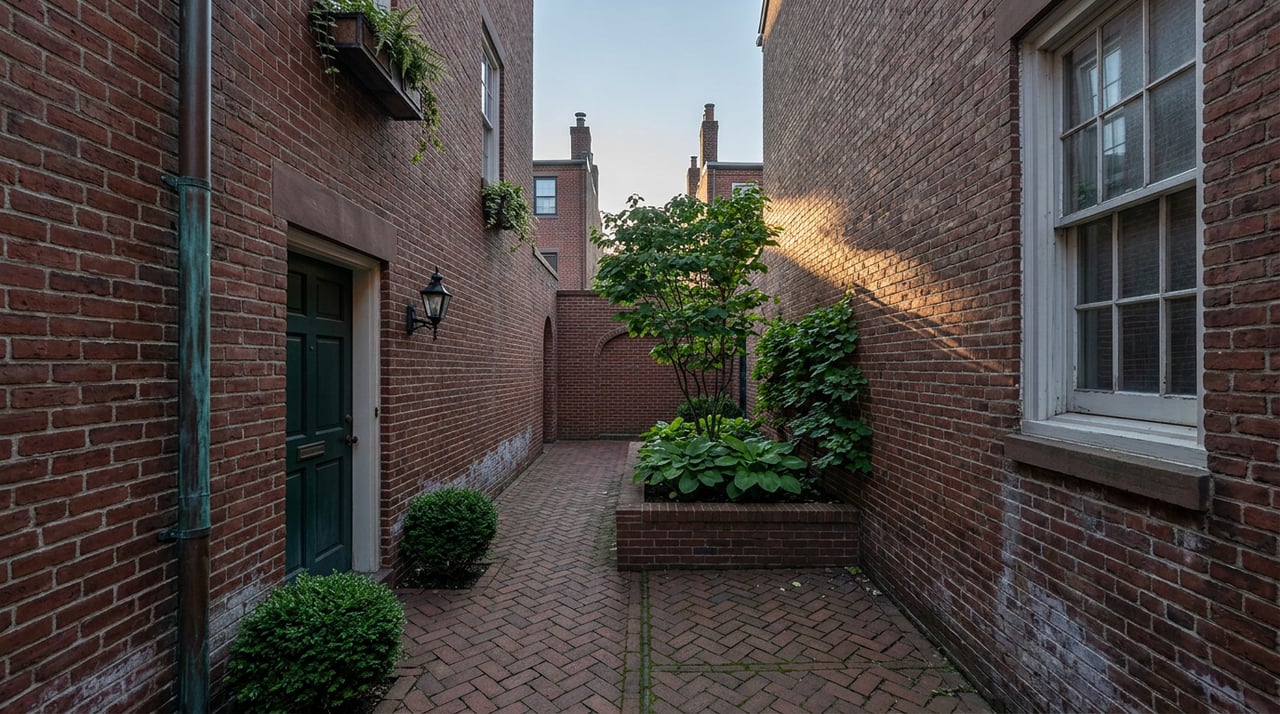
The North End was never built for that conversation. Its housing stock predates the automobile by a century or more, and the alleys and cart paths that became its streets were never going to yield 600-space garages carved into rowhouse basements. Off-street parking in the neighborhood exists almost entirely as a handful of commercial garages, not as a deeded feature attached to individual condo units. The North End Garage at 600 Commercial Street is the largest of these, with roughly 600 spaces, some leased on a monthly basis to residents and the rest sold by the hour or the day to visitors headed to TD Garden events or North End restaurants. It is infrastructure you rent, not real estate you own.
The comparison that looks favorable and the one that's actually happening
| Beacon Hill | North End | |
|---|---|---|
| Parking form | Deeded garage condo units (Brimmer Street, Charles Street) | Commercial garage leases, mainly North End Garage at 600 Commercial St |
| How it shows in a sale | Separate deed, priced and comped on its own | Bundled into monthly carrying cost, rarely itemized |
| Street parking | Resident permit only, similar scarcity to the North End | Resident permit only, with metered spots historically limited to a couple of stretches such as North Washington Street and Atlantic Avenue |
| Cost visibility to a buyer | High. A spot's market value is discoverable before you make an offer | Low. The real cost is a future monthly bill, not a purchase price |
The difference isn't that the North End has cheaper parking. It's that the North End's parking cost doesn't get capitalized into the transaction at all. A Beacon Hill buyer overpays or underpays for a specific, priced asset. A North End buyer inherits an ongoing expense that starts the month after closing and was never part of the negotiation.
Boston's resident parking permit program doesn't change that dynamic, it reinforces it. Permits carry no charge, according to the City of Boston's resident parking program, and city officials have said there is no cap on how many they issue. Spaces are handed out first-come, first-served, which means a permit gets you the right to compete for a spot on your block, not a guaranteed place to park. For a North End household that needs certainty rather than a nightly hunt, the honest alternative is a monthly commercial lease, and the North End Garage's own daily rates, which run from around $17 to $40 depending on length of stay and day of week, give a rough sense of where a monthly resident rate lands once you account for that kind of pricing structure.
Why this matters against today's North End numbers
North End condos have traded at an average of 97.2 percent of list price across 15 closed sales year to date through the first half of 2026, with a median 64 days from listing to accepted offer, according to a Boston condo market report tracking neighborhood-level sales. Supply sits at roughly 4.7 months, a level the same report characterizes as still favoring sellers.
Those numbers describe a neighborhood where pricing discipline still matters and where a buyer has some room to negotiate, given the extended days-to-offer compared to the frantic pace of a few years back. But none of those figures carry a parking line item, because there usually isn't one to carry. A buyer running per-square-foot math against a Beacon Hill listing that does include a deeded spot is comparing two different products. Strip the Beacon Hill deed out and its per-square-foot number often looks less like a premium and more like the same market, priced differently because it can be.
What to actually check before you assume the discount is real
If a car is part of your life in the North End, the discovery work happens before you write an offer, not after.
Ask the listing agent directly whether the unit includes any off-street space, deeded or leased, and get the terms in writing rather than assuming "parking available" means what you think it means. If the answer is no, price out a monthly commercial space near your target building, factoring in the walk from garage to door, since a discounted space six blocks away carries a real cost in a neighborhood built for walking rather than driving. Check which specific block your building sits on for resident permit competition, since parking pressure on Hanover Street differs from a quieter stretch near Cross Street. And if you're comparing offers across neighborhoods, ask your agent to run the numbers with an assumed monthly parking cost baked into your comparison, not just square footage against square footage.
None of this makes the North End a worse place to buy. It makes the comparison harder to shortcut. A neighborhood without a deeded parking market isn't hiding a cost. It's just not showing it to you until the first mortgage statement after closing.
FAQ
Can I ever buy a deeded parking spot in the North End? It's uncommon. The building stock that would support it, purpose-built garage structures converted to individually owned condo units, largely doesn't exist in the neighborhood the way it does on Beacon Hill. Occasional exceptions surface in newer construction, but they aren't the norm.
Is a Boston resident parking permit basically a guaranteed spot? No. The permit is free and carries no cap on the number issued, but access to an actual space is first-come, first-served under the City of Boston's resident parking rules. A permit gets you into the competition for a spot on your block, not a reserved one.
Does it make sense to own a car in the North End at all? Plenty of residents skip it entirely, leaning on walking, the T, and rideshare instead, and the neighborhood's density supports that choice better than most. If a car is non-negotiable for work or family reasons, budget for a monthly commercial space from the start rather than hoping street parking will cover you.
If you're weighing a North End purchase against other Boston neighborhoods and want the parking math run alongside the price math before you write an offer, True North Boston Realty knows this stretch of the city block by block. Contact us.