Ever wonder what day-to-day life in Boston’s North End actually feels like, beyond the famous restaurants and postcard-worthy streets? If you are thinking about buying, renting, or investing here, you need more than a tourist’s view. You need a practical sense of how the neighborhood lives, moves, and fits into your routine. Let’s dive in.
North End character
The North End has a distinct identity that is hard to mistake. It is Boston’s oldest residential community, with roots going back to the 1630s, and it sits in the northeastern corner of the city with Boston Harbor on two sides.
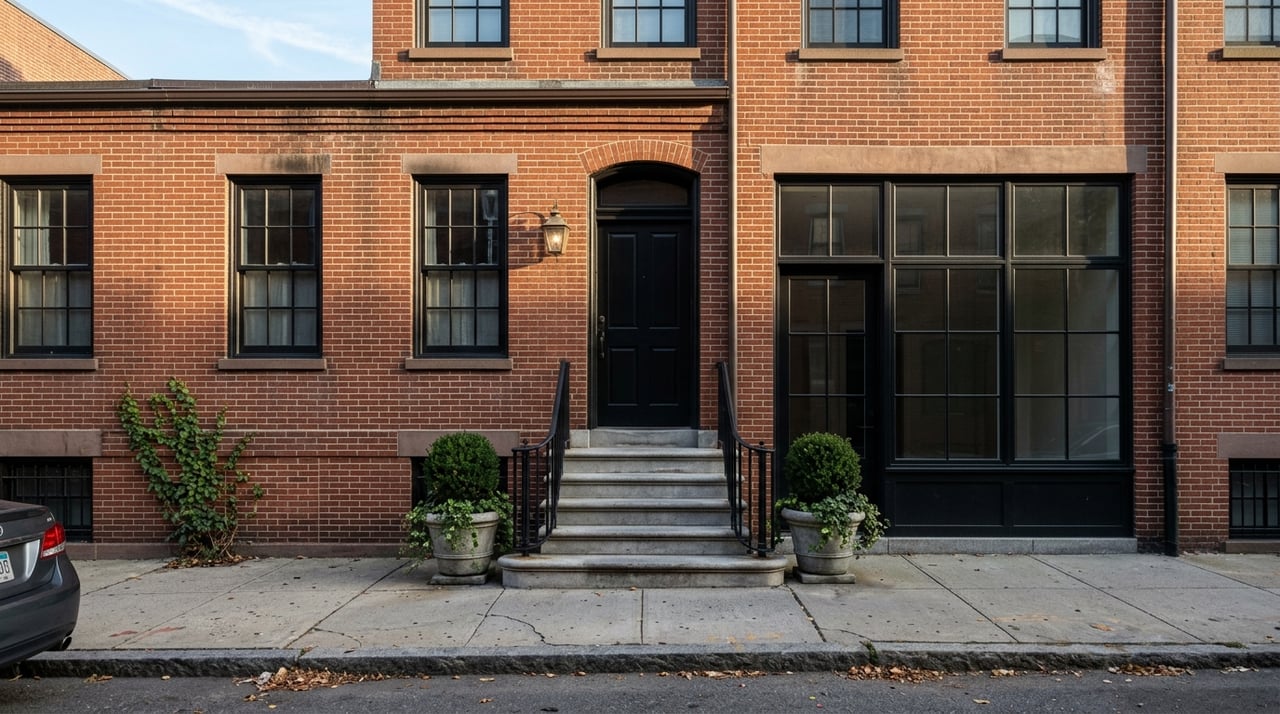
That history still shapes daily life today. Boston Planning describes the area as a mostly residential district with historic brick apartment buildings, narrow cobblestone streets, and summer festivals, while the City of Boston calls it one of the city’s most visited neighborhoods and a hub for Italian-American culture.
In other words, this is not a neighborhood that feels generic or interchangeable. It has a strong sense of place, and much of its appeal comes from the fact that it has stayed compact, walkable, and visually consistent over time.
What the housing feels like
If you picture detached homes with driveways and large yards, the North End will feel very different. Housing here is dominated by older multifamily buildings, condos, and apartments rather than single-family houses.
Boston planning data for 2025 shows 6,885 total housing units, with 6,286 occupied. Of those occupied units, 1,615 are owner-occupied and 4,671 are renter-occupied, which reflects a neighborhood where renting and condo living are both a major part of the market.
That matters when you start comparing properties. In the North End, layout, storage, building condition, association rules, and upkeep can vary sharply from one block to the next and even from one building to the next.
Expect compact living
The North End is dense by design. That density is part of what makes the neighborhood lively and walkable, but it also means many homes offer efficient space rather than extra room.
For some buyers and renters, that tradeoff feels worth it because you gain location, character, and easy access to daily essentials. For others, especially if you want more square footage or more separation from street activity, the fit may be less natural.
Historic buildings shape the experience
A lot of the housing stock is in older brick buildings, often with commercial space at street level on key corridors. Boston Planning notes that Hanover and Salem Streets are the main commercial spines, and many buildings include ground-floor businesses.
That mixed-use setup gives the North End a village-like feel. You are often living close to cafés, shops, restaurants, and neighborhood activity rather than in a purely residential setting.
Walkability is a major advantage
One of the clearest lifestyle benefits of living in the North End is how easy it is to get around without relying heavily on a car. This is a neighborhood built for walking.
Boston’s 2025 mobility data shows that 41.5% of North End workers walked to work, 15.8% used public transportation, and only 13.2% drove. Another 25.6% worked from home, which also fits the neighborhood’s compact urban pattern.
For many residents, daily life can be handled on foot. That can mean walking to grab coffee, pick up groceries, meet friends, head to transit, or simply enjoy the waterfront without planning your day around parking.
Transit access at the edges
The North End also benefits from strong transit access nearby. The City of Boston says North Washington Street acts as a transit gateway for five bus routes: 111, 93, 92, 428, and 426, serving about 17,000 bus riders.
Older transportation planning also notes that Haymarket and North Station sit at the neighborhood edge. Together, those access points help make the North End practical for residents who want an urban, car-light lifestyle.
Parking is usually the tradeoff
The convenience of walkability comes with a real compromise. Parking is more of a constraint than an amenity here.
Boston planning data shows that 56.4% of North End households had no vehicle. That figure helps explain the reality on the ground: many people choose this neighborhood knowing that car ownership may be inconvenient, expensive, or simply unnecessary.
Daily life on the main streets
The North End is one of Boston’s most visited neighborhoods, and that shapes the atmosphere. If you live here, you are not tucked away from activity. You are part of it.
Hanover and Salem Streets are lined with Italian restaurants, bakeries, and shops, and the waterfront bars and summer festivals add to the neighborhood’s energy. On many blocks, especially near historic sites and popular commercial stretches, the streetscape can feel busy and visitor-heavy.
For some residents, that is part of the fun. For others, it is important to understand that this is not a quiet, low-traffic neighborhood in the way some other parts of Boston may feel.
A strong sense of place
The North End offers more than food and foot traffic. It also has landmarks and community spaces that give the neighborhood depth and continuity.
The City of Boston highlights places like Old North Church, the Paul Revere House, and Copp’s Hill Burying Ground as key neighborhood locations. The Boston Public Library’s North End Branch adds community space and world-language collections in Italian and Spanish, while the waterfront includes Mirabella Pool, a skating rink, baseball fields, and bocce courts.
The city is also building a new community center next to Mirabella Pool, with completion anticipated in fall 2027. That ongoing investment matters because it shows the neighborhood is not only preserving its past, but also supporting everyday resident life.
Who tends to like living here
The North End tends to work best for people who want an urban lifestyle with a lot happening just outside the front door. If you value walkability, transit access, restaurant options, historic surroundings, and a neighborhood with a strong identity, it can be a very compelling fit.
Current city estimates show 9,471 residents, with 57% ages 20 to 34 and 80% holding a bachelor’s degree or higher. Those numbers help explain the area’s compact, youthful, city-oriented feel, though individual buildings and blocks can still vary a lot.
In practical terms, the best fit is often a buyer or renter who wants convenience and character more than space and parking. The less ideal fit is usually someone who wants a quieter setting, larger home footprint, or easier car storage.
Why the neighborhood changes slowly
One reason the North End keeps such a consistent feel is that it is tightly shaped by preservation-minded planning. The North End Neighborhood Design Overlay District is intended to protect the area’s scale, pedestrian environment, and concentration of historic buildings.
That means change often happens incrementally rather than dramatically. For buyers, sellers, and investors, this can be important because the surrounding context of a property is less likely to shift overnight in ways that erase the neighborhood’s core character.
There is a tradeoff, of course. The same protections that help preserve charm and continuity also support a dense, compact, closely regulated environment.
What this means if you want to move here
Living in the North End is often about deciding which tradeoffs feel worth it to you. You may give up square footage, storage, or easy parking, but gain walkability, history, waterfront access, and a neighborhood that feels genuinely rooted in Boston.
If you are buying, renting, or evaluating an investment property here, broad neighborhood appeal is only part of the story. The real differences often come down to the building itself, the block, the layout, and how the property matches your daily routine.
That is where local guidance matters. In a neighborhood with older housing stock, mixed-use buildings, and block-by-block variation, having someone who knows the North End firsthand can make your decision much clearer.
If you are exploring a move, preparing to sell, or weighing a North End investment, Stacy Schuster can help you make sense of the neighborhood with practical, local insight.
FAQs
What is daily life like in Boston’s North End?
- Daily life in Boston’s North End is compact, walkable, and active, with historic streets, mixed-use buildings, nearby waterfront amenities, and busy commercial corridors like Hanover and Salem Streets.
What types of homes are common in Boston’s North End?
- Boston’s North End is dominated by older multifamily buildings, condos, and apartments rather than detached houses, so buyers and renters should expect building-by-building differences in layout, storage, and upkeep.
Is Boston’s North End a good neighborhood for living without a car?
- Yes. Boston data shows many North End residents live car-light or car-free, with strong walking rates, nearby transit access, and more limited parking availability.
Is Boston’s North End quiet or busy?
- Boston’s North End is generally lively rather than quiet, especially near restaurants, historic sites, and main commercial streets that attract visitors as well as residents.
Who is Boston’s North End best suited for?
- Boston’s North End is often a strong fit for people who want a walkable, transit-friendly, restaurant-rich urban neighborhood and may be less ideal for those who want more space, easy parking, or a low-traffic setting.