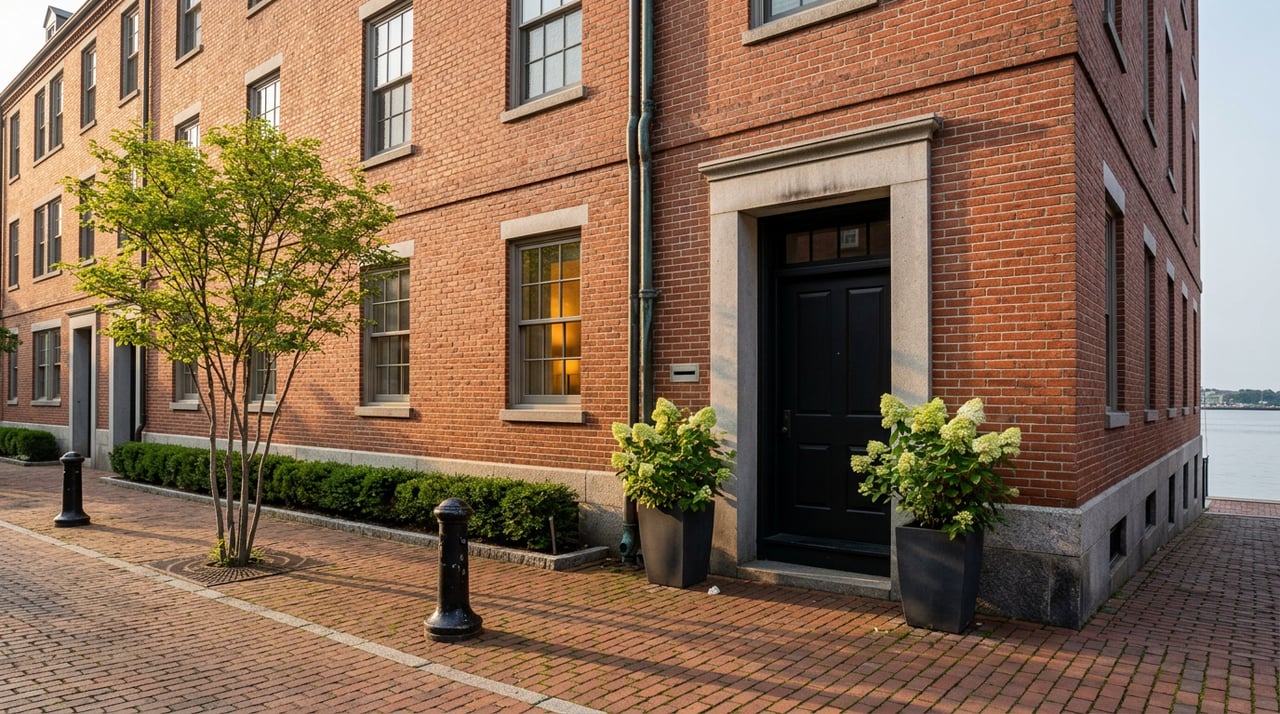
Picture two condos at similar price points along the Wharf District. One carries a monthly fee of $850. The other lists at $2,400. The instinct is to prefer the cheaper carry. On the Waterfront in 2026, that instinct is often backwards.
Here is the claim this post is built around: on Boston's Waterfront, a below-market monthly fee is usually a warning about what has not been funded yet, and a specific rule change taking effect on January 4, 2027 is about to force the reckoning into the open. The number to study is not the fee. It is the reserve behind the fee.
The gap between the citywide baseline and what Waterfront buildings actually charge
A LendingTree survey cited by The Boston Globe on April 16, 2026 reported the median monthly condo fee in Boston at $386, with nearly 30 percent of Boston condo owners paying more than $500 a month. Waterfront buildings sit in a different universe.
| Building | Recent monthly HOA range | Character |
|---|---|---|
| Burroughs Wharf | $1,076 to $1,753 | Traditional luxury association, marina orientation, single-level, duplex, and triplex layouts |
| Battery Wharf | $1,650 to $4,287 | Hospitality-style services, concierge, full amenity package |
| The Residences at InterContinental | $919 to $4,834 | Hotel-branded services, the widest spread |
Ranges reflect recent listing examples reviewed in a May 7, 2026 building comparison from The Residential Group. Fees at The Residences at InterContinental have averaged roughly $1.28 per square foot per month. A $386 citywide median tells you almost nothing about what a Wharf District condo will cost to hold month over month, and it obscures the more important question: what is the fee doing?
The honest read of that spread is that the fee funds three things a suburban condo fee does not. It funds staffing intensity that hospitality-branded buildings inherit from their operators. It funds marine-grade maintenance on facades, windows, and mechanicals that salt air degrades faster than inland stock. And on the better-managed buildings, it funds a reserve schedule that matches the actual capital calendar of a waterfront tower.
The January 4, 2027 hinge
On March 18, Fannie Mae announced that the minimum reserve requirement for condo associations to qualify for Fannie-backed mortgages will rise from 10 percent of the operating budget to 15 percent, effective January 4, 2027, as reported by The Boston Globe on April 16, 2026. Freddie Mac has not announced whether it will follow. If it does, effectively every condo association in the country will be recalculating its monthly fee to hit the new floor.
That is the mechanism behind the fee increases already showing up in Waterfront budgets. Associations that were coasting on a 10 percent reserve contribution now have twelve to eighteen months to lift it by half or risk making units in the building unfinanceable for a large share of buyers. An underpriced fee today is an underwriting problem tomorrow.
Eric Churchill, an executive vice president at the Needham consulting firm Schernecker Property Services, told the Globe that of the hundreds of condominium associations he has reviewed, not one was properly funded to maintain its infrastructure over the long term, and most were dramatically underfunded. That is the starting position for the buildings the Fannie Mae rule is aimed at.
Marine exposure is a capital schedule, not a view
Salt air and marine conditions accelerate wear on facades, windows, and mechanical systems. Waterfront and low-lying buildings often invest in floodproofing measures such as lobby flood gates, elevated electrical rooms, sump systems, and emergency backup equipment. When an association carries flood insurance, the premium and the maintenance for those systems become part of common expenses.
The city has been explicit that this is a permanent line item. Boston is actively implementing coastal resilience projects across Long Wharf, Fort Point Channel, South Boston, Downtown, the North End, and East Boston. Buildings sitting inside that footprint are planning around long-term sea-level rise and storm impacts whether or not their offering statements mention it. A fee that does not reflect any of that spending is not a bargain. It is a promise the association has quietly made to defer the work.
Harbor Towers, and why the number scared people
In 2007, the trustees of Harbor Towers on the Waterfront voted to spend $75.6 million to replace HVAC and other systems. Unit owners were assessed between $70,000 and $400,000 each, according to the Globe. Some owners sold their condos rather than pay.
That is the shape of the risk. It does not arrive as a gradually rising monthly fee. It arrives as a single letter. Harbor Towers is still a building people buy into, and combined penthouse residences trade there north of 2,800 square feet, but the 2007 assessment is the anecdote every Waterfront buyer should read before evaluating a fee that looks suspiciously low for the building's age.
The alternative to a special assessment is a monthly fee sized to a real reserve study. That fee will look higher. It is doing more work.
Reading the fee before you sign
The Globe's April 16 coverage laid out the questions a Waterfront buyer should be able to answer before writing an offer. Applied to a Wharf District or North End waterfront building, they land like this:
- How old are the building's major systems, and when were they last replaced? Elevators, HVAC, roof, facade, and window systems each have a capital lifespan. A 40-year-old waterfront tower with original systems and a $700 fee is telling you something.
- What does the current reserve study say the association should be holding, and what is it actually holding? Fannie Mae's 15 percent floor takes effect January 4, 2027. Being at or above that number now is a signal of discipline. Being well below it means a fee increase, a special assessment, or a financing problem is on the calendar.
- What is included in the fee, and what is billed separately? At Battery Wharf and The Residences at InterContinental, the fee reflects concierge, security, and hospitality-style services that other buildings unbundle. Comparing raw numbers between a full-service tower and a boutique conversion is not a real comparison.
- Are there any special assessments approved, pending, or in discussion? Board minutes will show what the offering sheet will not.
- What does the association's flood and property insurance actually cover, and how has the premium moved in the last three renewals? Waterfront insurance costs are the leading indicator of where the fee is going next.
- What are the rental restrictions? Fannie Mae's buyer guidance is to confirm bylaws, HOA rules, and project eligibility before treating rental flexibility as part of the plan. Investor-heavy buildings can also affect financing.
The Waterfront had 28 condos for sale at a $1.12 million median list price and a 35-day median time on market as of the most recent Redfin refresh before this post. At that price point, the difference between a well-reserved building and an underfunded one is not a rounding error. It is often the largest hidden cost in the transaction.
FAQ
Is a higher fee always a red flag? No. A higher fee often reflects broader services, more realistic maintenance planning, and a reserve schedule that actually matches the building's capital calendar. Whether the fee matches the building's real needs is the question, not whether it looks big next to a citywide median.
Will Fannie Mae's reserve change actually raise my monthly fee? If your building is already at 15 percent of the operating budget in reserves, likely not because of this rule alone. If your building is closer to 10 percent, the association has to close that gap by January 4, 2027, and monthly fees are the usual instrument.
How do Waterfront fees compare to nearby North End walk-up condos? Very differently. A brick walk-up on Prince or Salem Street with no elevator, no staff, and no shared amenities can run a fraction of a Wharf District tower. The tradeoff is that owners in the walk-up absorb more direct maintenance risk. Fee shopping across those two categories is not an apples-to-apples exercise.
Should the reserve study be part of my due diligence? Yes. Ask for it, ask when it was last updated, and read it against the building's age. A recent, honest reserve study is the single most useful document in a Waterfront condo file.
The Waterfront rewards buyers who read the fee as a sentence rather than a number. If you would like a second set of eyes on a specific building's budget, reserve study, or fee history before you write an offer, True North Boston Realty reviews these documents building by building. Contact Us to start that conversation.